

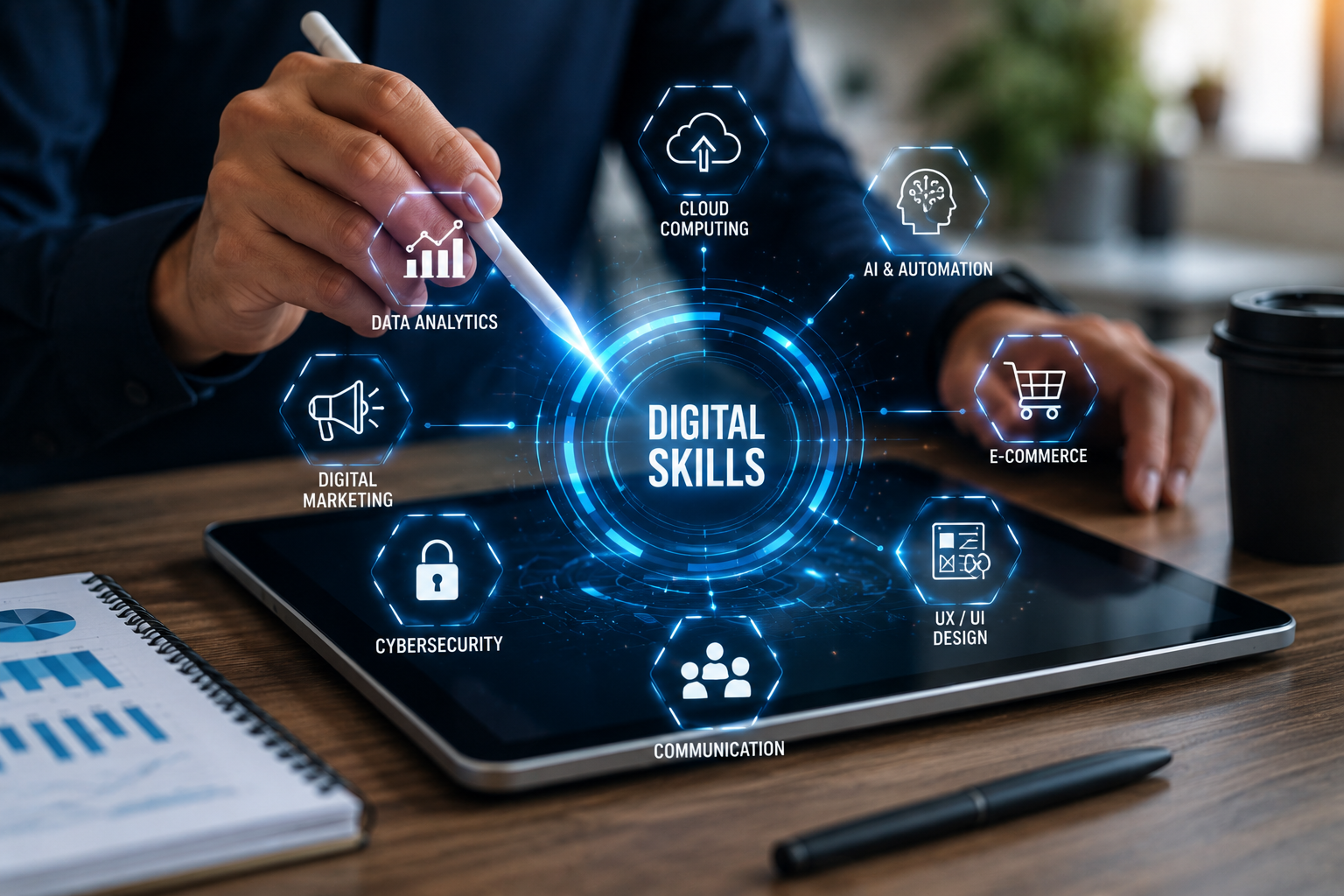
Discover the essential Digital Skills businesses need to improve productivity, embrace innovation, and stay competitive in the digital economy.
Skills Businesses Need in the Digital Economy
The digital economy has transformed how businesses operate, communicate, and compete. Technology is no longer limited to information technology departments—it now influences every aspect of business, from customer service and marketing to finance and operations. Developing strong Digital Skills is essential for organizations that want to remain competitive, improve efficiency, and adapt to rapidly changing market conditions.
Companies that invest in workforce development and digital capabilities are better prepared for long-term success.
Digital Literacy
Every employee should have a solid understanding of digital tools and technologies. Digital literacy includes using business software, collaborating through online platforms, managing digital files, and communicating effectively in virtual environments.
Strong digital literacy creates a foundation for adopting more advanced Digital Skills across the organization.
Data Analysis and Decision-Making
Businesses generate large amounts of information every day. Employees who can collect, interpret, and analyze data help organizations make smarter decisions based on evidence rather than assumptions.
Data-driven decision-making improves forecasting, customer insights, operational efficiency, and business strategy.
Artificial Intelligence Awareness
Artificial intelligence is becoming an essential business tool. Employees should understand how AI supports automation, customer service, data analysis, and productivity while recognizing its limitations and ethical considerations.
Organizations that develop AI knowledge are better positioned to integrate intelligent technologies into daily operations.
Cybersecurity Knowledge
Cybersecurity is everyone’s responsibility. Employees should understand how to recognize phishing attempts, create strong passwords, protect sensitive information, and follow company security policies.
Basic cybersecurity awareness significantly reduces the risk of cyberattacks and data breaches.
Cloud Computing Skills
Cloud-based platforms allow businesses to collaborate, store information securely, and access business applications from anywhere. Employees familiar with cloud technologies can work more efficiently in remote and hybrid environments.
Cloud computing also supports business scalability and operational flexibility.
Digital Marketing Expertise
Businesses increasingly rely on digital marketing to reach customers. Skills in search engine optimization (SEO), social media management, content creation, email marketing, online advertising, and analytics help organizations strengthen their online presence.
Effective digital marketing contributes directly to customer acquisition and business growth.
Communication and Collaboration
Modern workplaces depend on digital communication tools for meetings, messaging, project management, and document sharing. Employees who collaborate effectively across digital platforms improve productivity and teamwork.
Strong communication remains one of the most valuable Digital Skills in distributed work environments.
Adaptability and Continuous Learning
Technology evolves rapidly, making continuous learning essential. Businesses benefit from employees who embrace change, learn new software, and adapt quickly to emerging technologies and business processes.
An adaptable workforce helps organizations remain competitive in the digital economy.
Problem-Solving and Critical Thinking
Technology provides powerful tools, but human judgment remains essential. Employees who combine technical knowledge with analytical thinking can solve complex business challenges more effectively.
Creative problem-solving supports innovation while improving business performance.
Leadership in a Digital Workplace
Business leaders should understand how technology influences strategy, customer experience, and organizational performance. Digital leadership involves guiding transformation, encouraging innovation, supporting employee development, and making informed technology investments.
Strong leadership accelerates successful digital transformation initiatives.
Building a Digital-Ready Workforce
Organizations should invest in ongoing training, certifications, mentorship, and professional development programs to strengthen employee capabilities. Encouraging knowledge sharing and providing access to modern learning platforms helps employees continuously improve their Digital Skills.
A digitally skilled workforce enables businesses to respond quickly to changing market conditions and technological advancements.
Conclusion
Digital Skills have become essential for business success in today’s technology-driven economy. Digital literacy, data analysis, artificial intelligence, cybersecurity, cloud computing, digital marketing, collaboration, adaptability, and leadership all contribute to stronger organizational performance. Businesses that invest in developing these skills will be better equipped to innovate, improve efficiency, and achieve sustainable growth in an increasingly digital world.
FAQ
1. What are Digital Skills?
Digital Skills are the knowledge and abilities needed to use technology effectively in business, including software, data analysis, cybersecurity, communication, and digital collaboration.
2. Why are Digital Skills important for businesses?
They improve productivity, support innovation, strengthen decision-making, enhance customer experiences, and help businesses remain competitive.
3. Which Digital Skills are most valuable today?
Data analysis, artificial intelligence, cybersecurity, cloud computing, digital marketing, digital communication, and problem-solving are among the most valuable skills.
4. How can businesses improve Digital Skills?
Organizations can provide employee training, online courses, certifications, mentoring, and hands-on experience with modern technologies.
5. How do Digital Skills support business growth?
They enable businesses to adopt new technologies, improve efficiency, respond to market changes, enhance customer service, and create new opportunities for innovation and long-term success.
