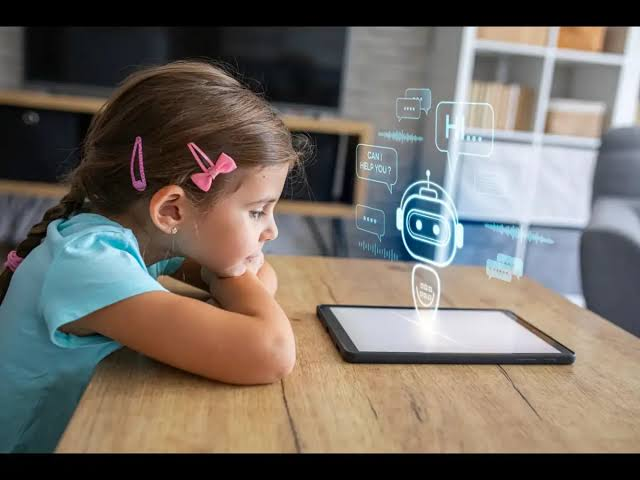
Artificial intelligence has already entered the classroom.
Sometimes officially.
Sometimes without permission.
And sometimes through a smartphone before a teacher even knows it is happening.
Students can now ask an AI system to explain a difficult mathematical concept, summarise a chapter, correct an essay, translate a paragraph, generate practice questions or help organise a research project within seconds.
That makes AI potentially one of the most powerful learning tools introduced in a generation.
It also creates a much harder question.
If technology can provide an answer instantly, what exactly should students be learning to do for themselves?
That question was at the centre of discussions at UNESCO headquarters in Paris this week, where around 700 students met experts in artificial intelligence to explore how new technologies are changing education and everyday life. UNESCO said digital technology and AI are affecting not only how students study, but also how they collaborate, form opinions, express themselves and participate in society.
The debate is no longer simply about whether AI belongs in education.
AI is already there.
The challenge is deciding what good AI-assisted education should look like.
The Homework Question Is Only the Beginning
Much of the early public debate around generative AI focused on cheating.
Could a student ask a chatbot to write an essay?
Could teachers determine whether homework had been generated by AI?
Would students stop doing their own research?
Those concerns have not disappeared.
But they represent only one part of a much larger transformation.
AI can increasingly act as a tutor, translator, brainstorming partner, research assistant and accessibility tool.
That means schools are facing something bigger than a plagiarism problem.
They are dealing with a change in how knowledge itself can be accessed.
Information Has Become Almost Instant
For previous generations, finding information often required considerable effort.
A student might visit a library.
Search through books.
Read several chapters.
Compare references.
Take notes.
Then assemble an answer.
Search engines dramatically accelerated that process.
Generative AI takes it another step.
Instead of giving students a list of pages to examine, an AI assistant can provide a direct response.
That convenience is powerful.
It can also remove some of the intellectual friction through which learning occurs.
Struggling With a Problem Can Be Part of Learning
Education is not simply the delivery of correct answers.
The process matters.
A student who struggles with a maths problem may develop reasoning skills while attempting different solutions.
Someone researching history learns to distinguish primary and secondary sources.
A student writing an essay learns how to structure an argument.
Someone studying a foreign language improves partly by making mistakes and correcting them.
If AI performs every difficult stage, students may reach the final answer without developing all of the skills required to produce it independently.
That does not mean AI should be removed.
It means its role matters.
A Calculator Offers a Useful Comparison
Calculators did not destroy mathematics education.
They changed it.
Students still learn basic arithmetic because understanding numbers matters.
But once those foundations exist, calculators allow them to solve more complicated problems efficiently.
AI may eventually occupy a similar position across many subjects.
The important question is when students should use it.
Using AI to explore a concept after attempting to understand it independently is very different from asking a system to complete an assignment without engagement.
The technology may be identical.
The learning outcome is not.
UNESCO Says Education Is Undergoing Structural Change
UNESCO described the current transformation as deeper than simply adding another digital device to classrooms.
Digital technologies influence how young people study and collaborate, but also how they develop opinions and participate in society.
That makes AI literacy increasingly connected to citizenship.
A student needs to know more than how to prompt an AI system.
They need to understand when its answer might be wrong.
Why it may contain bias.
Where information came from.
What information should not be shared with it.
And when a human source is more appropriate.
AI Can Sound Confident While Being Wrong
This is one of the most important educational challenges.
Generative AI systems can produce fluent, convincing language even when an answer contains errors.
A student unfamiliar with a subject may struggle to recognise those mistakes.
That creates an unusual situation.
The tool is most useful when the user knows enough to evaluate it.
But beginners are precisely the people least equipped to detect inaccurate information.
Teaching students to verify AI-generated claims may therefore become as important as teaching them to search the internet.
Source Checking Could Become a Core Skill
Imagine a student asks an AI assistant about a historical event.
Instead of accepting the response, the student could be required to identify its major claims.
Then locate credible sources.
Compare interpretations.
Identify missing context.
Correct errors.
Explain why one source is more trustworthy than another.
In that model, AI does not replace critical thinking.
It becomes material for critical thinking.
That could turn a potential weakness into an educational exercise.
Teachers Are Learning Too
The transformation is not happening only to students.
Teachers are also adapting.
Many entered the profession before generative AI existed.
Some have embraced the technology.
Others remain cautious.
Both responses are understandable.
Educators need practical guidance on what AI can do, where it fails and how it can be integrated without undermining learning objectives.
That requires training.
Simply giving schools access to technology does not automatically improve education.
UNESCO has similarly stressed that technology alone will not solve educational challenges.
More Than 25 Education Ministers Have Raised the Issue
The debate has moved well beyond individual classrooms.
During UNESCO's Digital Learning Week earlier this month, more than 25 education ministers and designated representatives adopted a joint statement calling for education to remain both a human right and a common good in the age of AI.
The statement highlighted public accountability, learner and teacher rights and governance around the integration of artificial intelligence into education.
That illustrates how quickly AI education has become a policy issue.
Access Could Be One of AI's Greatest Benefits
Used carefully, AI could expand access to personalised educational support.
Not every student can afford a private tutor.
Not every school has specialist teachers for every subject.
Not every parent can help with advanced mathematics, science or foreign languages.
An AI learning assistant could potentially explain the same concept repeatedly without becoming impatient.
It could present an explanation differently when the first version does not work.
It could generate additional practice exercises.
It could help students study outside normal school hours.
That could be enormously valuable.
Language Barriers Could Become Smaller
AI translation tools could also help students learning in a second language.
A difficult explanation could be translated.
Vocabulary could be defined immediately.
Students could practise conversations.
Teachers could potentially communicate more effectively with families who speak different languages.
In multilingual societies, those capabilities could improve participation.
But automated translation is not perfect.
Cultural meaning, context and specialised terminology can still be misunderstood.
Human judgement remains important.
Students With Disabilities Could Benefit
AI also has significant accessibility potential.
Speech-to-text can help students who struggle to type.
Text-to-speech can assist learners with visual impairments or reading difficulties.
AI systems can simplify complex passages.
Automatic captioning can support students with hearing impairments.
Adaptive learning tools can present material in different formats.
The important principle is that technology should reduce barriers rather than create new ones.
But Access to AI Is Not Equal
The same technology that could narrow educational gaps could also widen them.
Students do not all have identical internet access.
They do not all own modern laptops or smartphones.
Schools do not have equal budgets.
Paid AI services can provide capabilities unavailable on free versions.
Some countries have advanced digital infrastructure.
Others struggle to provide reliable electricity or basic classroom resources.
If education systems assume every student has equal access to AI, existing inequalities may deepen.
The Digital Divide Is Becoming an AI Divide
For years, policymakers discussed the digital divide primarily in terms of access to computers and the internet.
That divide is evolving.
Now the question may be whether students have access to high-quality AI systems, whether those systems work in their language and whether teachers know how to use them effectively.
A school with strong infrastructure and trained staff may gain enormous educational benefits.
Another school may be left further behind.
That makes equitable access an important part of AI education policy.
Privacy Creates Another Problem
Students generate sensitive information.
Their names.
Their schoolwork.
Their learning difficulties.
Their interests.
Potentially their personal circumstances.
AI platforms can collect data when users interact with them.
Schools therefore need clear rules about what students and teachers should enter into external systems.
A child should not have to sacrifice privacy in order to participate fully in modern education.
Young People Need to Understand Their Data
Digital literacy should include data literacy.
What happens when information is uploaded?
Is it stored?
Can it be used to improve a model?
Who has access?
Can it be deleted?
Students increasingly need to understand that an online conversation may not be equivalent to a private conversation with a teacher.
This is particularly important when children use consumer AI tools outside school supervision.
Assessment May Need to Change
Traditional homework often assumes that students complete work independently outside the classroom.
Generative AI complicates that assumption.
If a chatbot can produce a reasonable essay in seconds, assigning the same essay and simply banning AI may become increasingly difficult to enforce.
Schools may need to rethink assessment itself.
More work could happen in classrooms.
Students could defend arguments orally.
Assignments could include personal reflection.
Teachers could assess drafts and the process behind a final submission.
Students might be required to disclose how AI was used.
The Question Could Shift From "Did You Use AI?"
A more useful question may eventually be:
How did you use it?
Did the student ask AI to produce the entire assignment?
Or did they use it to brainstorm possible research questions?
Did they copy the response?
Or did they challenge it?
Did they verify its claims?
Did they improve their own work after receiving feedback?
Those distinctions matter.
Treating every AI interaction as identical may become increasingly unrealistic.
Original Thought Will Become More Valuable
When competent text can be generated almost instantly, simply producing paragraphs may become less impressive.
What becomes valuable instead?
A strong idea.
An unusual question.
Original research.
Personal observation.
Sound judgement.
Reliable verification.
The ability to connect information in ways a machine has not.
Paradoxically, widespread AI could make genuinely human thinking more important rather than less.
Creativity Is Also Being Redefined
Students can already generate images, music, presentations and videos with AI.
That opens extraordinary creative possibilities.
Someone without advanced drawing skills can visualise an idea.
A student can experiment with music composition.
A science class can generate visual explanations.
But creativity is more than producing an attractive output.
It includes deciding what should be created and why.
Taste matters.
Intent matters.
Selection matters.
Editing matters.
AI can generate possibilities.
Humans still have to decide which possibilities are meaningful.
Teachers Remain Central
Predictions that technology will replace teachers have appeared repeatedly.
Television was supposed to transform education.
Personal computers were supposed to transform it.
The internet certainly did transform access to knowledge.
Yet teachers remain essential.
That is because education is social.
Teachers notice when a student is confused.
They motivate.
They challenge.
They adapt explanations.
They understand classroom dynamics.
They recognise when someone is struggling emotionally.
AI can provide information.
That is not the same thing as understanding a child.
Human Relationships Matter in Learning
A memorable teacher does more than deliver facts.
They can change how a student sees a subject.
A teacher who encourages curiosity can influence an entire career.
A coach can build confidence.
A classroom discussion can expose students to perspectives they had never considered.
These experiences depend on human interaction.
The most successful use of AI in education may therefore be technology that gives teachers more time for those human responsibilities rather than trying to eliminate them.
AI Could Reduce Administrative Work
Teachers spend substantial time on tasks outside direct teaching.
Preparing materials.
Creating quizzes.
Drafting routine communications.
Organising lesson plans.
Producing differentiated exercises.
AI can potentially accelerate some of this work.
If used responsibly, that could allow educators to spend more time working directly with students.
The value of automation would then be measured not by how many teachers it replaces, but by how much useful teaching time it restores.
Students Need Permission to Question Machines
There is also a cultural issue.
People often treat computers as authoritative.
If software produces a polished answer, users may assume it is correct.
Schools need to teach the opposite instinct.
Question it.
Ask where the information came from.
Look for evidence.
Compare sources.
Identify assumptions.
Recognise uncertainty.
That habit is valuable far beyond AI.
It is fundamental to critical thinking.
AI Literacy Is Becoming Media Literacy
Young people already navigate an online environment containing misinformation, advertising, manipulated imagery and algorithmic recommendations.
Generative AI adds another layer.
Synthetic photographs can appear real.
Voices can be cloned.
Videos can be manipulated.
Text can be produced at enormous scale.
Students therefore need to understand not just how AI helps create information but how it can alter the information environment around them.
Schools Cannot Ignore the Technology
Trying to preserve education exactly as it existed before generative AI is unlikely to succeed.
Students will encounter these systems outside classrooms even if schools prohibit them internally.
Future workplaces will also increasingly use AI tools.
Education therefore has a responsibility to prepare students for that reality.
Preparation does not mean unrestricted adoption.
It means informed adoption.
Rules Still Matter
Schools need boundaries.
Certain assessments may need to remain AI-free.
Young students may require stronger restrictions.
Sensitive personal information should not be entered into public systems.
AI-generated material should not automatically be treated as factual.
Students should understand when disclosure is required.
Different age groups will need different rules.
A single policy for every student and every subject is unlikely to work.
Governments Face the Same Balancing Act
Policymakers want students prepared for an AI-driven economy.
But they also have obligations involving children's rights, privacy, equality and educational standards.
Move too slowly and schools may become disconnected from the world students actually inhabit.
Move too quickly and poorly tested technology can become embedded before its consequences are understood.
That is why governance has become a major part of the international discussion.
UNESCO's recent ministerial meeting specifically emphasised deliberative governance and public accountability as countries integrate AI into education.
The Future Classroom May Look Familiar
Despite all the technological change, the classroom of the future may still contain recognisable elements.
Teachers.
Students.
Books.
Discussion.
Writing.
Experiments.
Questions.
What changes is the set of tools surrounding those activities.
AI may sit beside calculators, search engines and educational software as another layer of assistance.
Its impact will depend on how people choose to use it.
Education Has Adapted Before
Schools have survived major technological transitions.
Printed books changed education.
Mass literacy changed it.
Calculators changed mathematics.
Computers changed research.
The internet changed access to information.
Smartphones changed how students communicate.
Each technology created fears as well as opportunities.
AI may be more powerful than many previous educational tools, but the central challenge remains familiar:
How do we use new technology without losing the skills it was supposed to strengthen?
The Answer Is Not Simply More Technology
The gathering of 700 students at UNESCO highlighted an important point: young people themselves need to be included in conversations about how AI changes education.
Students are not passive recipients of this transformation.
They are already using the technology.
They know where it helps.
They know how classmates misuse it.
They experience its strengths and frustrations directly.
Their perspective matters.
The Bigger Question Is About Thinking
The future of AI in education will involve software, regulation, teacher training and infrastructure.
But underneath all of those issues is something more fundamental.
What do we want an educated person to be able to do?
Remember information?
Find information?
Evaluate information?
Create new ideas?
Solve unfamiliar problems?
Work with other people?
Recognise when a machine is wrong?
AI forces education systems to reconsider those questions.
That may ultimately be more important than the technology itself.
The classroom is changing.
The goal should not be to make students better at getting instant answers.
It should be to make them better at knowing which questions to ask, which answers to trust and when to think for themselves.