
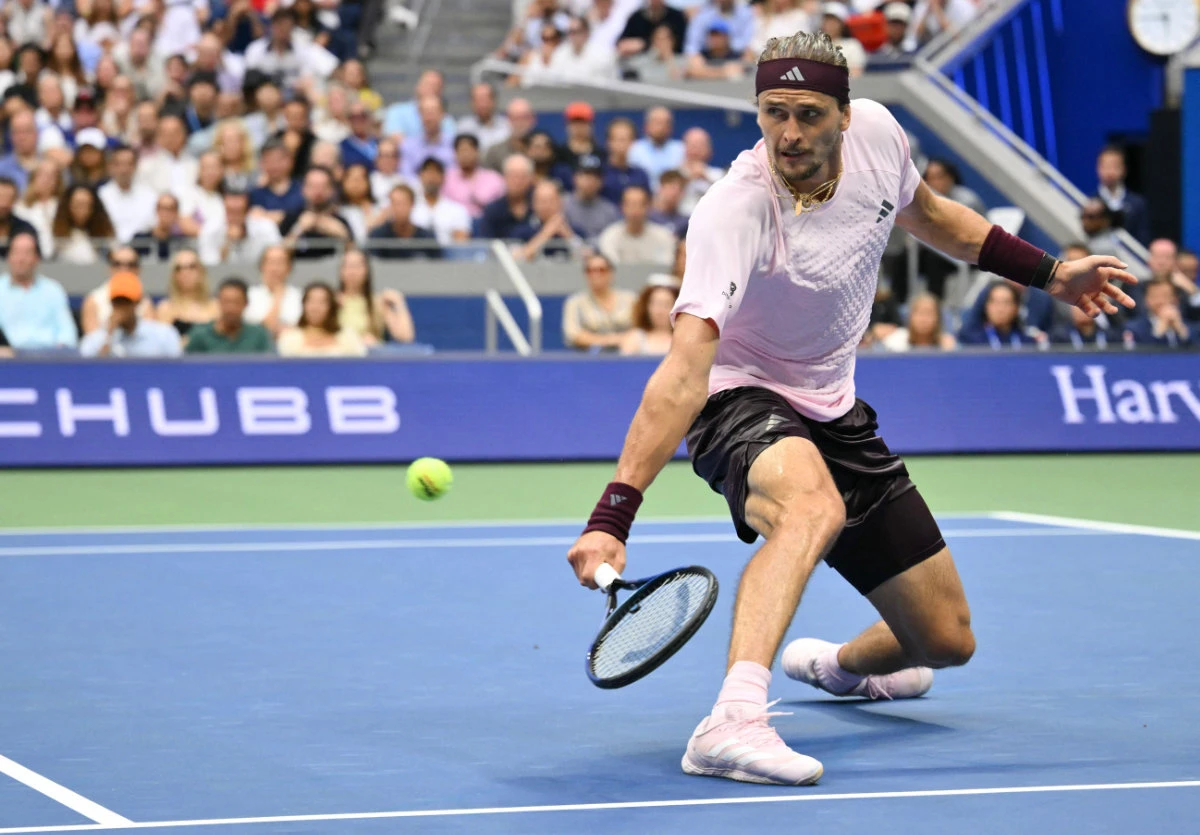
Alexander Zverev Conquers New York as Ben Shelton Signals a New Era for American Tennis
Six years after leaving New York with one of the most painful defeats of his career, Alexander Zverev finally walked away from the US Open as champion.
The German defeated American Ben Shelton 6-3, 7-6(2), 5-7, 6-2 in the men’s singles final, adding the US Open trophy to the French Open title he captured earlier in 2026. For Zverev, the victory represented another major step in a career that has included Olympic gold, serious injury, repeated Grand Slam disappointment and, finally, multiple major championships.
Yet the final produced two significant stories rather than one.
Zverev confirmed his place among the leading players of the current era.
Shelton showed why American tennis believes another homegrown Grand Slam champion may eventually emerge.
New York Had Been the Scene of Zverev’s Biggest Disappointment
The location made the victory particularly meaningful.
In 2020, Zverev reached his first US Open final and came extremely close to winning it. He led Dominic Thiem by two sets before losing the championship in five.
For a player chasing his first Grand Slam title, that defeat became difficult to escape.
Zverev continued reaching the later stages of majors, but the biggest trophy remained missing.
His career then faced an even more serious obstacle.
A Major Injury Changed His Career
During his 2022 French Open semi-final against Rafael Nadal, Zverev suffered a severe ankle injury that forced him away from competition.
Returning to professional tennis after a major injury is difficult enough.
Returning to the level required to compete for Grand Slam titles is considerably harder.
Players need to rebuild physical conditioning, movement and confidence while competing against opponents who have continued developing during their absence.
Zverev gradually returned to the top of the sport.
In 2026, that comeback turned into something much bigger.
Paris Changed the Story
Earlier this year, Zverev won the French Open.
That victory gave him his first Grand Slam singles championship and made him the first German man since Boris Becker in 1996 to win a major singles title.
Winning one major can change how a player's career is viewed.
Winning another in the same season changes the conversation again.
New York demonstrated that Roland Garros was not an isolated breakthrough.
Zverev had become a multiple Grand Slam champion.
Shelton Had an Entire Stadium Behind Him
The final was very different for Ben Shelton.
The American entered Arthur Ashe Stadium trying to achieve something US men's tennis had been waiting more than two decades to see.
No American man has won a Grand Slam singles championship since Andy Roddick captured the US Open in 2003.
Shelton had an opportunity to end that drought at the same tournament.
The New York crowd understood the significance.
The atmosphere strongly favoured the American, but Zverev remained composed.
Zverev Controlled the Opening Set
Grand Slam finals often begin with both players testing each other.
Zverev settled faster.
He took the opening set 6-3, immediately placing Shelton under pressure.
The German's experience mattered.
He had already played major finals.
He understood the emotional rhythm of a championship match.
Shelton, by contrast, was experiencing the biggest singles match of his career.
That difference became particularly important during the second set.
The Tiebreak Created a Mountain for Shelton
The second set was considerably tighter.
Shelton stayed with Zverev and forced a tiebreak, creating an opportunity to level the match.
Zverev instead dominated the breaker 7-2.
Two sets to love.
At that point, Shelton needed to win three consecutive sets against one of the world's best players.
The championship appeared to be moving rapidly towards Zverev.
Shelton refused to disappear.
Shelton Fought Back in the Third
The American took the third set 7-5.
For the home crowd, it changed the atmosphere instantly.
A straight-sets defeat had been avoided.
The possibility of a comeback suddenly existed.
Grand Slam tennis can change dramatically when a player who appears beaten wins one set.
Confidence returns.
The crowd becomes louder.
The leading player starts thinking about opportunities that have already passed.
Zverev had experienced that exact situation before in New York.
This time, he responded differently.
Zverev Refused to Repeat 2020
The fourth set became the defining part of the final.
Instead of allowing Shelton to build momentum, Zverev reasserted control.
He won it 6-2 and completed the championship.
The response was significant because of what happened six years earlier.
In 2020, Zverev had held a commanding lead in the US Open final and watched it disappear.
In 2026, his opponent again threatened to create a comeback.
This time Zverev stopped it.
That difference is one of the clearest signs of how much his career has changed.
Two Grand Slams in One Season
Winning both Roland Garros and the US Open in the same year is particularly impressive because the tournaments demand different skills.
The French Open is played on clay.
The US Open is played on hard court.
Clay slows the ball and creates higher bounces, often rewarding patience, movement and long rallies.
Hard courts generally produce a faster style of tennis and place different demands on serving and returning.
Success on both surfaces demonstrates versatility.
Zverev's 2026 season has now produced major championships on each.
The Victory Also Broke a Recent Pattern
Men's tennis has recently been shaped heavily by Carlos Alcaraz and Jannik Sinner.
Their emergence appeared to signal the beginning of another concentrated rivalry at the top of the sport.
Zverev's two-major season complicates that picture.
Rather than allowing the biggest tournaments to become a contest dominated by two players, he has inserted himself firmly into the championship conversation.
That is healthy for the sport.
Tennis becomes less predictable when several players enter a major with realistic expectations of winning it.
Shelton’s Defeat Still Represented Progress
Finals naturally produce one winner and one loser.
But the result alone does not explain Shelton's tournament.
At 21, he reached his first Grand Slam final and became the first Black American man in 54 years to reach the US Open men's final, following Arthur Ashe.
That is historically significant regardless of the final result.
It also adds another major milestone to the development of a player who has attracted attention because of his athleticism, powerful serve and expressive personality.
American Men Have Been Waiting Since 2003
The statistic follows US men's tennis everywhere.
Andy Roddick won the US Open in 2003.
No American man has won a Grand Slam singles championship since.
During that period, American women's tennis enjoyed extraordinary success, particularly through Serena and Venus Williams and later players including Coco Gauff.
The men's side struggled to produce the same results at the majors.
That does not mean American men's tennis lacked talented players.
The problem was converting depth into championships.
Several Americans Have Been Moving Closer
Taylor Fritz reached a US Open final.
Frances Tiafoe has made deep runs in New York.
Other American players have climbed the rankings and become regular threats on tour.
Shelton now adds another name to that group.
This matters because tennis development rarely depends on one player alone.
When several athletes from the same country begin competing deep into major tournaments, they create competition among themselves.
They practise together.
They push rankings higher.
Younger players see a pathway.
One breakthrough can encourage another.
Shelton Brings Something Different
Shelton's appeal is not based only on results.
He plays with visible emotion.
His serve is a major weapon.
He embraces large crowds.
His athletic style produces the kind of points that travel quickly across social media.
Those qualities matter in modern professional sport.
A player can be both an elite competitor and an entertainment figure.
Tennis needs personalities capable of connecting with audiences beyond people who already follow every tournament.
Shelton has the potential to become one of them.
The US Open Is Built for Personality
Of the four Grand Slam tournaments, New York has always had a distinctive atmosphere.
The crowds can be loud.
Night sessions can feel closer to major entertainment events than traditional tennis matches.
Celebrities fill the stands.
Music surrounds the sessions.
Players react differently to that environment.
Some find it distracting.
Others become more dangerous because of it.
Shelton's personality fits naturally with New York.
That relationship helped make his run particularly compelling.
Tennis Is Competing in the Attention Economy
Modern sport is not competing only against other sport.
It competes against streaming platforms, gaming, social media, music and endless digital entertainment.
That makes personalities increasingly valuable.
Fans may first discover a player through a short video rather than a full tennis match.
A spectacular serve can become a viral clip.
An emotional celebration can circulate worldwide.
A rivalry can attract viewers who previously had little interest in the sport.
The challenge for tennis is converting those moments into long-term fans.
Grand Slams Still Create Something Social Media Cannot
Despite the changing media environment, major tournaments retain enormous power.
A Grand Slam championship cannot be manufactured through marketing.
A player must win seven matches against increasingly difficult opponents across two weeks.
They must handle fatigue.
Pressure.
Weather.
Crowds.
Media attention.
And the knowledge that one poor afternoon can end the entire campaign.
That difficulty gives the trophies their value.
Prize Money Reflected the Tournament’s Scale
Zverev earned $5.5 million for winning the men's singles title, a Grand Slam record according to Reuters.
The figure demonstrates how large professional tennis has become as a global entertainment business.
Major tournaments generate revenue through broadcasting, sponsorship, hospitality, ticket sales and merchandise.
Players are the central product.
Without elite competition, none of those other revenue streams exist.
New York Is More Than a Tennis Tournament
The US Open has increasingly become part of the city's entertainment calendar.
Fans attend for tennis, but the tournament also incorporates food, fashion, celebrity culture and corporate hospitality.
This broader experience helps explain why major sporting events are becoming valuable cultural properties.
The same pattern can be seen in Formula One, major football tournaments and basketball events.
Sport remains the centre.
Entertainment expands around it.
Zverev’s Career Now Looks Different
Before 2026, conversations about Zverev often focused on what he had not achieved.
He had won major tour events.
He had earned Olympic gold.
He had spent years near the top of the rankings.
But he had not won a Grand Slam.
That absence dominated his résumé.
Now he has two.
The transformation happened within one season.
The Injury Makes the Achievement More Significant
Elite sport offers no guarantee that a player will return to the same level after a serious injury.
Physical recovery is only one component.
Movement patterns can change.
Players may become hesitant.
Opponents evolve.
Rankings fall during long absences.
Zverev's return from his 2022 ankle injury to multiple Grand Slam champion represents one of the defining arcs of his career.
The New York victory completed a circle that began with disappointment there six years earlier.
Shelton Does Not Need to Wait 24 Years Himself
American fans will inevitably connect Shelton's defeat with the country's long men's Grand Slam drought.
For the player himself, the more useful perspective is much shorter.
He is 21.
He has already reached a major final.
He now knows what the final weekend of a Grand Slam feels like.
He knows what happens when an entire stadium expects him to win.
Those experiences cannot guarantee another opportunity.
But they can make the next one easier to understand.
Losing a First Final Can Become Part of a Champion’s Story
Tennis history contains many champions who lost major finals before eventually winning one.
Zverev himself is now an obvious example.
His first US Open final ended painfully.
Six years later, he returned and won the tournament.
A defeat does not automatically become a stepping stone.
Some players never reach another final.
But it can become one if the player learns from it.
Shelton now faces that challenge.
American Tennis Has Reason for Optimism
The 24-year drought remains intact.
That is the factual reality.
But droughts are usually broken only after players begin repeatedly getting close.
A national tennis programme cannot manufacture a Grand Slam champion on command.
It can create development pathways, coaching systems and opportunities.
Eventually, an individual player has to win seven matches at the right tournament.
Shelton came one match away.
New York Produced Two Different Victories
Only Zverev lifted the trophy.
But the tournament changed perceptions around both finalists.
For Zverev, New York removed one of the most painful unfinished chapters of his career.
He returned to the stadium where he once surrendered a two-set lead and left as a two-time Grand Slam champion.
For Shelton, the tournament provided evidence that he can compete on the sport's biggest stage.
The American drought continues.
So does Shelton's pursuit of his first major.
But after the 2026 US Open, that possibility no longer feels theoretical.
He has already reached the final Sunday.
The next challenge is finding his way back — and changing the ending.