
France Wants Quantum Computers to Work With Supercomputers — Without Repeating AI’s Biggest Bottleneck
The next revolution in computing may not involve replacing today's most powerful machines.
It may involve connecting them to an entirely different kind of computer.
France's Atomic Energy Commission, known as the CEA, and French quantum-computing company Alice & Bob have announced a collaboration aimed at integrating quantum processors with conventional supercomputers. The project will expand software that can decide which parts of a computational problem should be handled by traditional hardware and which could benefit from quantum processing.
It sounds highly technical, but the idea addresses one of the biggest practical questions surrounding quantum computing: how will organisations actually use quantum machines alongside the enormous computing infrastructure they already have?
Quantum Computing Is Not Simply a Faster Computer
Quantum computers are often described as extraordinarily powerful machines capable of solving problems that today's computers cannot.
That description is partly useful, but it can also be misleading.
A quantum computer is not simply a conventional computer with a much faster processor.
Traditional computers store and manipulate information using bits, generally represented as zeros and ones. Quantum computers use quantum bits, or qubits, which behave according to the principles of quantum mechanics.
That different architecture could eventually make quantum systems exceptionally useful for certain classes of problems.
But it does not mean quantum machines will be better at everything.
For many everyday computing tasks, conventional processors will remain more practical.
The Future Could Be Hybrid
That is why researchers increasingly envision a hybrid computing environment.
A traditional supercomputer could handle most of a complex workload while sending particular calculations to a quantum processor when quantum techniques offer an advantage.
Once the quantum calculation is completed, the result could be returned to the conventional system for further processing.
In other words, the two types of machine would cooperate.
France's new collaboration is intended to help build the software layer that makes this possible.
The concept is similar to how modern computing already distributes workloads between different types of processors.
Today's Computers Already Divide the Work
A modern data centre does not necessarily ask one processor to perform every calculation.
Central processing units handle general tasks.
Graphics processors excel at massively parallel calculations.
Specialised AI accelerators handle machine-learning workloads.
Networking hardware moves information between systems.
Software determines where different jobs should run.
Quantum processors could eventually become another specialised component inside this ecosystem.
The challenge is making all those pieces communicate efficiently.
France Is Building Around Qaptiva
The CEA and Alice & Bob collaboration centres on Qaptiva, an open-source quantum software platform originally developed by French supercomputer manufacturer Bull.
According to Reuters, the partners want to expand the software so quantum processors can be integrated more effectively with high-performance computing infrastructure.
That could allow researchers to develop applications without building every part of the software stack themselves.
Software ecosystems matter enormously because powerful hardware is difficult to use without accessible development tools.
Nvidia Demonstrated Why Software Matters
The modern artificial-intelligence boom offers a useful lesson.
Nvidia became enormously important not only because it produced powerful graphics processors.
Its CUDA software platform gave developers a mature environment for programming those processors.
Over time, enormous numbers of researchers, universities and companies built their AI work around that ecosystem.
That created powerful network effects.
More developers attracted more software.
More software encouraged more organisations to buy compatible hardware.
The cycle reinforced itself.
France Does Not Want Quantum Computing to Develop the Same Bottleneck
CEA executives specifically pointed to the AI industry when discussing the need for a diverse quantum-software ecosystem.
The concern is not that Nvidia's technology failed. In fact, its success demonstrates how valuable an integrated software platform can become.
The concern is dependence.
If a future quantum-computing industry becomes centred around one dominant software environment, organisations could find it difficult to switch hardware providers or develop alternative technologies.
France wants to encourage multiple options before that happens.
Open Software Can Help Hardware Companies Compete
An open ecosystem can reduce barriers for smaller hardware developers.
Imagine that every quantum computer requires completely different software.
A company considering quantum technology would need to rewrite applications whenever it changed hardware suppliers.
That creates friction.
If software can instead communicate with several types of quantum processor, customers gain more flexibility.
Hardware companies can then compete more directly on performance rather than relying on customers being locked into one software ecosystem.
Alice & Bob Is Taking a Different Approach to Qubits
Alice & Bob is one of several companies developing quantum hardware, but its approach is distinctive.
The French startup is developing so-called cat qubits, named after the famous Schrödinger's cat thought experiment.
Quantum systems are extremely sensitive to errors.
Tiny disturbances can disrupt calculations.
Error correction is therefore one of the biggest challenges preventing quantum computers from scaling into broadly useful machines.
Alice & Bob's approach is designed to make certain types of errors less likely at the hardware level.
That could reduce the amount of additional error-correction infrastructure required.
Error Correction Is the Central Quantum Challenge
A conventional computer can perform trillions of operations reliably.
Quantum processors are much more fragile.
Temperature fluctuations, electromagnetic interference and other environmental effects can disturb quantum states.
Researchers therefore need ways to identify and correct errors without destroying the quantum information they are trying to preserve.
This is exceptionally difficult.
A useful large-scale quantum computer may require many physical qubits to create a much smaller number of reliable logical qubits.
Reducing that overhead could make practical quantum machines easier to build.
Quantum Computers Need Extreme Environments
Many quantum processors operate at temperatures extraordinarily close to absolute zero.
That requires specialised refrigeration equipment.
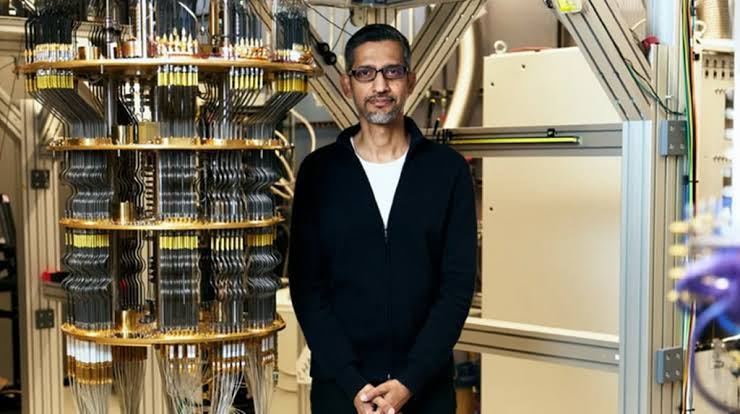
The machines can look less like traditional computers and more like elaborate scientific experiments.
This is another reason quantum computing is unlikely to replace laptops or smartphones.
Consumers probably will not have quantum processors sitting under their desks.
Instead, organisations may access them remotely through data centres and cloud services.
The experience could resemble today's cloud computing.
A user sends a task to specialised hardware somewhere else and receives the result.
Supercomputers Are the Natural Partners
High-performance computing centres already operate some of the world's most advanced computational infrastructure.
They support climate modelling, scientific simulations, nuclear research, engineering, medicine and many other fields.
Adding quantum processors to those facilities makes practical sense.
Researchers would gain access to both technologies in one environment.
The conventional supercomputer could handle the enormous amount of work it already performs efficiently.
The quantum processor would only be called when a suitable problem appears.
That is the model France is preparing for.
The CEA Is Already Testing Multiple Quantum Technologies
France is not betting exclusively on Alice & Bob.
Reuters reports that the CEA has already integrated quantum machines from French companies Quandela and Pasqal, while an Alice & Bob quantum computer is expected to be installed in 2027.
This multi-provider approach is important.
Quantum computing remains an experimental industry.
Different companies are pursuing different technologies, and it is not yet clear which architecture will prove most effective for large-scale commercial systems.
Maintaining several options reduces the risk of committing too early to one approach.
France Is Trying to Create a Domestic Quantum Industry
Quantum computing has become strategically important for governments.
The technology could eventually influence pharmaceuticals, materials science, logistics, finance, energy and cybersecurity.
Countries therefore do not want to depend entirely on foreign suppliers.
France has built a growing network of quantum startups, research laboratories and government programmes.
The CEA can play a particularly important role because it is both a major research institution and a potential early customer.
Reuters reports that the organisation operates with an annual budget of around €6 billion.
Government Can Become the First Customer
Deep-technology startups face a difficult problem.
Building advanced hardware is extremely expensive.
But private customers may hesitate to buy technology that is still experimental.
Government research organisations can bridge that gap.
They can purchase early systems.
Give companies access to laboratories.
Test prototypes.
Provide technical feedback.
And help establish whether the technology works outside a startup's own facilities.
That can make it easier for young companies to eventually reach commercial customers.
Europe Is Thinking About Technology Sovereignty
The quantum initiative also fits a much broader European debate.
Europe depends heavily on technology platforms and semiconductor infrastructure developed elsewhere.
American companies dominate many areas of cloud computing, AI and software.
Asian manufacturers play central roles in semiconductor supply chains.
European policymakers increasingly describe advanced technology as a strategic capability rather than simply a commercial product.
Quantum computing sits directly inside that discussion.
If it becomes an important computing platform, Europe wants to participate in building the technology rather than merely purchasing it.
Quantum Computing Is Still Early
The excitement needs perspective.
Quantum computers are not currently replacing conventional supercomputers.
They have not suddenly made today's encryption obsolete.
And they do not offer magical acceleration for every computational problem.
The technology remains difficult to scale.
Researchers are still improving qubit quality, error correction, control systems and software.
Some proposed commercial applications may take years to become practical.
Others may never outperform conventional computing enough to justify their cost.
That uncertainty is normal for an emerging technology.
The Software Is Being Built Before the Hardware Is Mature
At first this may seem premature.
Why build a sophisticated software ecosystem when large-scale quantum computers do not yet exist?
Because software takes time too.
Developers need tools.
Researchers need programming frameworks.
Organisations need experience combining quantum and conventional workloads.
If the hardware becomes useful before the software ecosystem is ready, adoption could be slowed.
Preparing both simultaneously increases the chance that useful applications can emerge when machines become capable enough.
Businesses Need Problems, Not Quantum Computers
For most companies, owning a quantum machine is not the goal.
Solving a business problem is.
A pharmaceutical company might want to model molecular interactions.
A logistics company might want to optimise a complex network.
An energy company might want better simulations.
A financial institution might investigate optimisation or risk calculations.
The underlying hardware matters only if it improves the outcome.
This is why integration software could ultimately be more important to users than the details of the quantum processor itself.
Hybrid Systems Could Hide the Complexity
The ideal future interface may not require a researcher to manually decide which processor should perform every calculation.
Software could analyse the workload automatically.
Most of the task would remain on conventional hardware.
A specialised section could be sent to a quantum processor.
The results would then be recombined.
To the user, it might appear to be one computing environment.
Behind the scenes, several fundamentally different machines would be cooperating.
That is the direction projects such as the CEA collaboration are trying to enable.
Quantum Computing Could Follow the AI Infrastructure Story
The AI boom demonstrated how quickly specialised computing can become economically important.
For years, GPUs were primarily associated with computer graphics and gaming.
Machine learning transformed them into strategic infrastructure.
Demand exploded.
Data centres were redesigned around them.
Companies spent billions securing supply.
Quantum computing could eventually experience its own infrastructure moment if researchers demonstrate clear advantages for valuable commercial problems.
France does not want to wait until that happens before building its ecosystem.
But There Is No Guaranteed Quantum Boom
Technology history contains many innovations that appeared transformative but developed more slowly than expected.
Quantum computing may follow that path.
Progress could be gradual.
Useful systems may remain specialised.
Classical algorithms could improve enough to compete with some proposed quantum applications.
The economics may also prove challenging.
This is why today's investment should be understood as preparation rather than proof that a quantum revolution has already arrived.
Cybersecurity Is Watching Closely
Quantum computing is particularly important to cybersecurity because sufficiently capable machines could threaten some encryption techniques used today.
Governments and companies are already moving towards post-quantum cryptography, which is designed to remain secure against future quantum attacks.
This transition is happening before large cryptographically relevant quantum computers exist because important information may need to remain confidential for many years.
Technology planning often begins long before the final hardware arrives.
The French software project follows the same logic.
Competition Could Benefit the Industry
A diverse ecosystem can create healthy pressure.
One company may build better qubits.
Another may develop better control electronics.
Another may create stronger error-correction methods.
Another may produce superior development software.
If standards allow these components to work together, innovation from several companies can contribute to the overall system.
If every platform is completely isolated, progress can become fragmented.
Interoperability therefore has economic as well as technical value.
Developers Will Ultimately Decide What Becomes Standard
Governments can fund platforms.
Companies can build tools.
But technology ecosystems often succeed because developers choose to use them.
Developers prefer tools that are reliable, well documented and easy to integrate.
A technically impressive platform that is difficult to use can struggle against a slightly less powerful competitor with better software.
Again, Nvidia's AI success provides an important lesson.
Hardware and software cannot be separated.
France Is Preparing Before the Winner Is Known
The most interesting part of the CEA and Alice & Bob partnership may therefore not be one quantum computer.
It is the decision to prepare an ecosystem while the industry's future remains open.
The CEA already works with quantum machines from Quandela and Pasqal, and Alice & Bob's system is expected to join that environment in 2027.
Instead of assuming one company or architecture will dominate, France is building infrastructure intended to accommodate multiple technologies.
That is a strategic choice.
The Next Computing Revolution May Be a Partnership
For decades, computing progress was often imagined as one generation of machine replacing another.
Quantum computing may develop differently.
Conventional computers are extraordinarily capable and continue improving.
Quantum processors are likely to be valuable only for particular types of calculation.
The future may therefore belong not to quantum computers instead of supercomputers, but to systems where both work together.
France is already building the software for that possibility.
And by trying to keep that software ecosystem open, its researchers hope to avoid discovering years from now that one company controls the doorway to an entirely new form of computing.